AR 180B Is It For You?
By Gregory Kielma
This is a subtitle for your new post
The AR-180's Rise: A New Favorite in the Civilian Semi-Auto Rifle Market
Opinion by Ava Chen
Like to own this firearm, AR180? Give me a call today, FFL and Firearms Instructor Gregg Kielma 888 880 5444
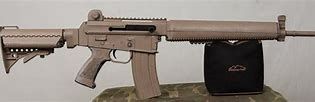
A pivot to the civilian market gave rise to the AR-180, which weighed just over 6 pounds and featured an 18-inch barrel with a 1-in-12-inch twist rate, ideal for the 55-grain .223 bullets standard at the time. It had a true 5.56mm chamber, allowing it to fire both 5.56mm NATO and .223 Remington rounds. Despite being ahead of its time and offering a reasonable price point, the AR-180 faced competition challenges, partly due to its proprietary magazine system which was not compatible with AR-15 magazines—this was later rectified after 2001 improvements.
The AR-180B, introduced by the “new” ArmaLite in 2001, featured a polymer lower receiver and AR-15 magazine compatibility, representing a significant update to the original design. “Building a new AR-180 was just a natural progression for us,” stated Mark Westrom, president of ArmaLite. The weapon’s lightweight build, balance, and improved features, such as an effective non-detachable compensator and the potential for match-trigger upgrades, were highly praised. In addition to the rifle’s technical merits, its competitive price of $660 for law enforcement made it an attractive option for departments on a tight budget.
Despite its merits, the AR-180B struggled in sales and ceased production in 2007. It seemed as though the AR-180 was destined to become a footnote in firearm history, appreciated only by a dedicated few within the gun community.
However, in a surprising twist, the AR-180 has seen a renewed interest in the market, potentially due to its rarity and unique design history. In 2019, the WK180-C, a modern descendant of the AR-180 lineage, sparked new enthusiasm. Manufactured by Kodiak Defense in Canada and commissioned by Wolverine Supplies, the WK180-C incorporates AR-15 compatibility in barrels, muzzle brakes, triggers, and other parts, while maintaining the AR-180’s distinctive features.
Like to own a thus fire, AR180? Give me a call today, FFL Gregg Kielma 888 880 5444 and read the information below:
Says Kielma know the facts:
The ArmaLite AR-18/180 is an interesting piece of firearms history. Let’s delve into why it was discontinued.
The AR-18/180 was born out of Eugene Stoner’s desire to improve upon the gas-impingement system used in the AR-15/M16. Stoner’s final design for ArmaLite, the 7.62-caliber AR-16, combined a short-stroke, gas-piston system with a better caliber. However, after the adoption of the M14 rifle, Stoner left ArmaLite.
Another team of engineers, led by Arthur Miller, adapted the short-stroke piston design into a rifle chambered in 5.56 NATO caliber. This became the AR-18, which later spawned a semi-automatic civilian version—the AR-180. The AR-18/180 featured stamped and welded steel construction, making it a more budget-friendly alternative to the AR-15/M16. It replaced expensive forgings with stamped components, including the internal hammer.
Despite some actual improvements, sales of the AR-180B floundered, leading to its discontinuation in 2007. The rifle was ahead of its time in many ways, but it faced challenges in the market1. Interestingly, Brownells later introduced the BRN-180, a modernized version inspired by the AR-180, which has gained popularity among firearm enthusiasts2. Sometimes, even innovative designs struggle to find their place in history!