Castle Doctrine and Castle Doctrine Law Lets Take A Look
By Gregory Kielma
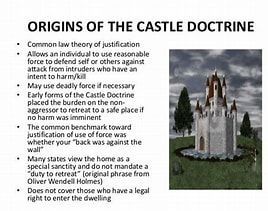
“Castle Doctrine”
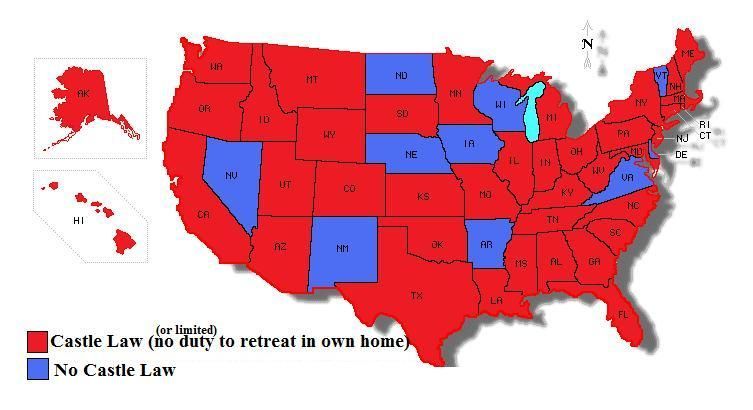
Know The Laws in YOUR State, Never ASSUME
Is it legal to shoot someone inside your home without warning if they break in?
Please understand your rights, contact a legal professional in your state and understand the law. Print out the law and have it ready if you become involved in a “reasonable person”, home invasion. Let’s look at Davids reasoning about a home invasion. This is what David had to say when he was questioned.
Most, not all states recognize the legal concept of “Castle Doctrine.” Even in California, but it is limited. New Jersey is a duty to retreat state, and that even includes in your own home. Some states recognize a duty to retreat in public, but not your home.
Essentially there are two parts to the basis for Castle Doctrine - your home is your Castle, and you have the right to defend it. The other part is if somebody breaks into an occupied dwelling, they have a plan to subdue or kill the occupants. Even some methods of subduing somebody can lead to bodily harm and even death - hitting them over the head with a club; tying them up and leaving them hoping somebody fries them before they die of dehydration; etc.
If Castle Doctrine is recognized in your state, therefore there is a reasonable fear of injury or death from somebody who has broken into your home, and you are not required to give a warning. You can assume they are armed, and a warning would only give them a chance to get the first shot. Warning shots are reckless discharges of a firearm.
The Castle Doctrine in Florida allows individuals to use or threaten to use deadly force to protect themselves in their homes without a duty to retreat.
Overview of the Florida Castle Doctrine
If you are reading this from another state, know your rights. It's incumbent on YOU to know your laws. Ignorance is not an excuse. Let's look at Florida's Castle Doctrine.
The Castle Doctrine is a legal principle that grants individuals the right to defend themselves against intruders in their homes, often referred to as their "castle." In Florida, this doctrine is codified in Florida Statute 776.013, which outlines the conditions under which a person may use deadly force in self-defense.
Key Provisions of Florida's Castle Doctrine
1. No Duty to Retreat:
Individuals have no obligation to retreat when they are in their dwelling, residence, or occupied vehicle. They can stand their ground and use or threaten to use force if they reasonably believe it is necessary to prevent imminent death or great bodily harm to themselves or others.
2. Presumption of Fear:
The law presumes that a person has a reasonable fear of imminent peril when using or threatening to use defensive force against someone unlawfully entering their home or vehicle. This presumption supports the justification for using deadly force in such situations.
3. Unlawful Entry:
The doctrine applies when a person unlawfully and forcibly enters a dwelling, residence, or occupied vehicle. In such cases, the individual is presumed to be doing so with the intent to commit an unlawful act involving force or violence.
4. Relationship with Stand Your Ground Law
In 2005, Florida expanded its self-defense laws with the Stand Your Ground statute, which further allows individuals to use deadly force without a duty to retreat, even in public places. While the Castle Doctrine specifically pertains to one's home, the Stand Your Ground law extends similar protections outside the home, allowing individuals to defend themselves in any location where they have a legal right to be.
Conclusion
The Castle Doctrine in Florida provides robust protection for individuals defending their homes against intruders. It emphasizes the right to use force without retreating, reinforcing the legal standing of self-defense in situations involving unlawful entry. Understanding these laws is crucial for anyone concerned about self-defense rights in Florida.
For specific legal advice or situations, consulting with a legal professional is recommended.