FRT Forced Reset Trigger Update
By Gregory Kielma
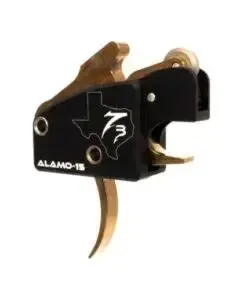
FRT Update
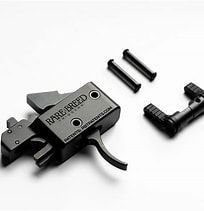
FRT Update
01/31/2026
In a move that has stunned many in the firearms community, the United States government, through the Bureau of Alcohol, Tobacco, Firearms and Explosives (ATF), filed a rare “Statement of Interest” on January 26, 2026, in a private patent infringement lawsuit in the Eastern District of Tennessee. The case pits ABC IP, LLC and Rare Breed Triggers, Inc. against Timothy Hoffman, an individual inventor, and his small Tennessee-based company, Hoffman Tactical LLC. Rather than remaining neutral in what is ostensibly a civil dispute over intellectual property, the Department of Justice chose to weigh in heavily on the side of the plaintiffs, urging the court to consider the “public interest” as strongly favoring a preliminary injunction against Hoffman.
At the heart of the dispute are forced reset triggers (FRTs). These devices allow semi-automatic firearms to achieve a faster cyclic rate by mechanically resetting the trigger after each shot. Rare Breed Triggers holds several patents on its version of this technology, and it alleges that Hoffman infringed those patents by designing and publicly sharing 3D-printable files for a similar “super safety” trigger design. Hoffman, like many innovators in the 3D-printing and home-gun-building community, openly released his files, enabling hobbyists to experiment and manufacture their own parts.
What makes this case extraordinary is the federal government’s intervention. The ATF’s filing explicitly states that it has a “strong interest… in discouraging unregulated manufacture of forced reset triggers.” It argues that enjoining Hoffman would advance public safety and support the agency’s broader efforts to limit the proliferation of FRTs. Remarkably, the government cites a May 2025 settlement agreement it reached with Rare Breed, after years of aggressive enforcement actions against the company, as justification for now backing Rare Breed’s private patent enforcement crusade.
This settlement is worth examining closely. After the Supreme Court’s 2024 decision in Garland v. Cargill struck down the ATF’s bump-stock rule, the agency’s legal position on other rapid-fire devices like FRTs became precarious. Facing multiple adverse court rulings, the ATF chose to settle its civil enforcement actions against Rare Breed. In exchange for dropping the lawsuits, Rare Breed agreed not to design FRTs for handguns and crucially to “take all reasonable efforts to enforce its patents and seek injunctions” against anyone else making or distributing FRTs. In essence, the government outsourced part of its regulatory agenda to a private company, turning a former enforcement target into an ally.
Now, when a small inventor like Timothy Hoffman independently develops and shares a competing design, the federal government steps in, not to prosecute him criminally, but to lend its considerable weight to a corporate plaintiff seeking to shut him down. This move is a profoundly troubling development for several reasons.