What Are Your Chances Dying Carrying a Gun
By Gregory Kielma

Does carrying a gun all the time increase or decrease your chance of death?
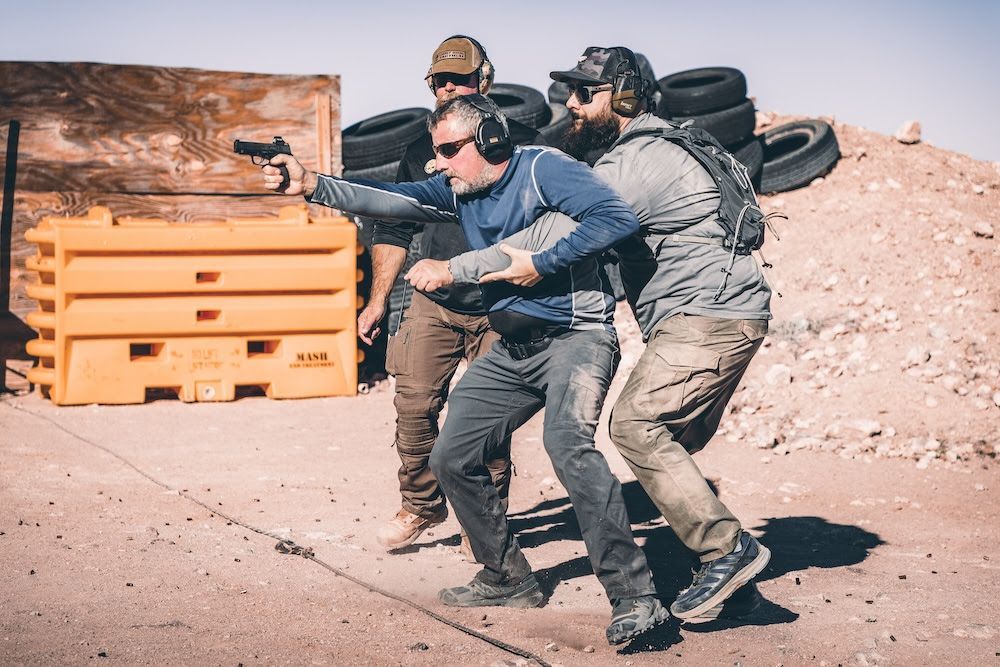
Does carrying a gun all the time increase or decrease your chance of death?
Gregg Kielma
FFL/Gunsmith/ Firearms Instructor- First Aid Instructor- AED Distributor
Behavior counts.
I’ve lost count of the times I’ve nearly been killed. The one’s I remember are:
1. Turned on a lathe with a high speed setting and didn’t see the chuck key on the underside of the chuck. Shot just past my head with enough force to stab through my eye socket.
2. Took a motorcycle off the road around 50 miles per hour, maybe a bit faster, got thrown and landed headfirst in a freshly plowed, rock free, fence free field. I was wearing a helmet but dang near broke my neck.
3. Got the flu and was self-employed with a lot of work that had to be done. I didn’t stop working until I got up walk to my front door and dang near collapsed. I had to lay on the back of a couch for thirty minutes to get just enough strength to walk back to my bed. I’m pretty sure had I continued to push it I would have either died from the flu or some accident caused by my weakened state.
4. Had 110-volt current pass one inch over my heart.
5. Had a ladder drop on me about seven feet from the bottom of my feet. Slammed the backside of my left upper arm against the side of the ladder as I landed face down and my head banged on the rung. My arm took most of the blow and had some significant internal bleeding and I have a permanent crease in the muscle over my skull. Had my head taken most of the force, well……
6. That’s not counting the multitude of near traffic accidents due to other people’s mistakes or carelessness.
That’s all over about 60 plus years. For about 45 of those years, I’ve carried a handgun at least in my vehicle or on me.
I’m a quite a bit more careful these days and wouldn’t do some of those things I did, like not wearing a full body hazmat suit or riding a motorcycle, but a firearm is one of the safest things I’ve ever handled. It’s because I expect the thing to go off and treat it as such.
There’s a common composition fallacy that people make. X% of people who do something have bad results, therefore X% of the time I will have those bad results when I do that something. A statistic that shows the percentage of people that have a negative result means very little about the result you will get. That percentage could be the percentage of people that are careless, stupid, criminal, or self-destructive. If those don’t apply to you, your odds are lower. If they do apply to you, your odds are higher. Because .013% of all drivers are in a fatal accident each year doesn’t mean that .013% of the time you’ll be in a fatal accident.
So, when you hear that a gun in the home, or carrying a gun, is most likely to injure or kill the person with the gun (Kellerman), look at the study. In the oft quoted study, Kellerman excluded all self-defense situations where no one was hurt. So, deciding that a gun would more likely hurt you rather than defend you is not a valid conclusion since he didn’t include all cases of self-defense.
He compared the likelihood of killing or injuring someone illegally in the home to someone legally in the home and found that someone legally in the home is more likely to be shot than someone illegally in the home. What exactly does this prove? Not that you’re mostly likely to be hurt rather than defend yourself as noted in the previous paragraph. What he proves is that most times someone won’t illegally enter a home if someone is there, and that you’re more likely to be killed by someone you know than a stranger. Murder usually has a motivation and that comes from a relationship. Stranger on stranger murder does occur but it’s much rarer. Something homicide detectives have known since there’s been homicide detectives.
He also noted that a person in the home who has a history of violence, meaning a person that chooses violence when non-violent means are preferable, and the use of illegal drugs are equally correlated to the presence of the gun. Meaning if you are in relationship with someone that chooses violence and impairs his judgment, you might get hurt and if there’s also a gun, he might use that gun. Well yeah, dummy. How about not being around a violent meth head?
Obviously, I hope, taking a statistic generated by a bit of selective reasoning and claiming that most guns in the home will kill someone legally in the home when a person of violence that has impaired judgement from mind-altering drugs can access that gun in that home doesn’t transfer to a sober, responsible person who avoids violence and violent people who has a gun properly stored in the home.
Gregg Kielma
FFL/Gunsmith/ Firearms Instructor- First Aid Instructor- AED Distributor