What is Considered a High Capacity Magazine
By Gregory Kielma
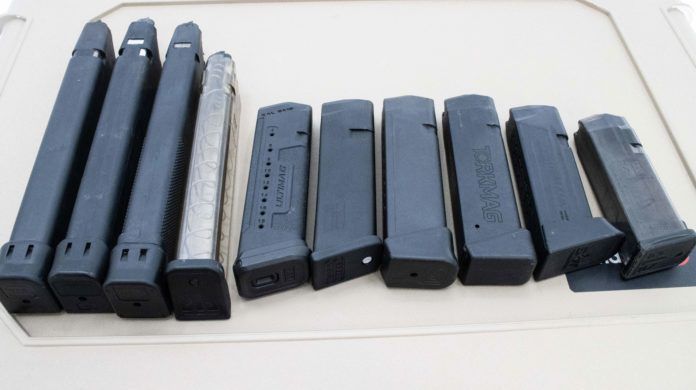
What Technically Is a High-Capacity Magazine?

The Dope: Joe Biden
What Technically Is a High-Capacity Magazine?
By
TTAG Contributor
February 16, 2024
Politicians adore the term “high-capacity magazine,” in references to guns that they so passionately hate. President Biden has made it a favorite term when advocating for gun control, and he blames the ills of weapon-related deaths on such accessories. It is important, however, that despite the rhetoric, people understand what this term means, and how it is being misused, because what people often say are “high capacity” are nothing more than old standards.
“High capacity” would logically refer to something excessive from the norm. Generally, politicians advocating for bans of such items claim this includes any firearm magazine capable of holding more than 10 rounds of ammunition (some states, such as Colorado, have set this limit at 15 rounds). One should ask, is this appropriate? The clear answer is “no.”
More than 10 rounds of ammunition does not logically mean these magazines are “high capacity,” and research is constantly being misconstrued by disingenuous politicians to falsely claim that guns with magazines over 10 rounds are more deadly.
To get to the root of what kind of capacity was the norm before this “high capacity” term came into vogue over the last few years, we can look back at some fairly standard measures. In the 1960s, for instance, we find that the introduction of civilian M16 variants came standard with a 20-round magazine. Double, then, of what politicians later blindly decided was their target limit.
We also find that it was then only a few short years after the Gun Control Act of 1968 that the United States Army set a standard of 30-round magazines accompanying issued rifles during Vietnam. Further still, in 1980, NATO–through STAGNAG (NATO Standardization Agreement)–adopted the 30-round magazine as a standard, as well. As we see, whether for civilian rifles or military rifles, never has 10 or 15 been a standard number when it comes to ammunition feeding devices.
Regarding pistols, capacities of 10 or below were a product of early gun design (think revolvers and the iconic 1911) that has long been advanced upon, even well before the proliferation of the “high capacity” term.
One of the most famous guns of all of course is the Glock 17, designed by Gaston Glock. That pistol, introduced in 1982 and having since become a stalwart in both civilian and law enforcement circles, holds 17 rounds, and has ever since its inception. That is just one model and one example that for more than 40 years has maintained a 17-round capacity. Reportedly, more than five million Glock 17s have been sold, on top of the fact that most other full-size Glocks also carry similar amounts of ammunition. This means that just one brand has sold perhaps more than 10 million models that have magazines with a capacity of more than 10 rounds. At this point, calling a standard Glock 17 “high capacity” is nothing short of hyperbole.
Beyond Glock, the examples abound as well. To use just another popular model with great history, we can look at the Beretta M9/92SF, made famous by its use in the United States Army. That gun comes with 15-round magazines and has done so since the model’s adoption in 1990. More examples include the Smith & Wesson Model 59, introduced in 1971 with 14-round magazines and even the legendary Browning Hi-Power that came out in the late 1930s and typically carried 13.
Under any consideration, there is no fair basis for referring to magazines with more than 10 rounds of capacity as “high capacity.” It is irrational, and irresponsible, for politicians to adopt such terms, and it is nothing more than made up political drama designed to carry favor with people who encourage civilian disarmament and at the same time, simply do not know any better.
The easiest thing gun advocates can do is stop playing the “high capacity” game. There are a myriad of wonderful advocates for gun rights out there that have unfortunately started using the language, and by doing so, they assist in normalizing the nonsense. Advocates for gun rights should use appropriate terms when discussing issues involving potential gun restrictions and be clear: some states are attacking the right to own standard–capacity magazines. That is the fact, full stop.
Anti-gun politicians hope it sounds outrageous when they say an incident occurred with a “high-capacity” magazine. They want to stir emotions and solicit favor for gun bans and further gun restrictions, even though it is clear they do not work to reduce violent crime (unsurprisingly it is already illegal to harm someone in most circumstances). In response, advocates for gun rights should make sure that it evokes equal outrage when they point out the truth that many elected officials are attacking the lawful right to own a standard accessory.
The reality is that saying something repeatedly does not make it true, but in this case, it can if we let it.
—By Dr. Nate Jendrick, Guest Columnist
Author Bio:
Dr. Nate Jendrick has been a law enforcement officer since 2014 and is currently a K9 handler in Washington. Nate holds additional duties as a Field Training Officer, Patrol Tactics Instructor and Defensive Tactics Instructor. Outside of policing, he is also the author of numerous books in various nonfiction categories. He earned his Master’s in Public Administration from the University of Texas, and his Ph.D. in Criminal Justice Leadership from Liberty University.